

she was the best of me, until I ripped her heart out
the subtlety with which dismissal comes does not negate the impact of its blow

I’m not sure I ever was a child. Memories of that little girl are fuzzy, possibly even false constructions of imagination and stories I’ve been told about myself over the years.
Somewhere, early on, I have to think I was a child who hoped, a child who approached the beauty in the world with bemused awe. I assume I didn’t always fear the gaze of strangers, and I could probably ramble on about my little girl hopes and dreams, never fathoming that one day others would use those things against me.
I used to have stuffed animals lining my bed. I slept with all of them. They all had names and lives and little personalities. They kept me company; I told them my secrets, and they told me their stories.
I loved them all. In the unabashed, wholehearted way that kids can love anything.
Love as a child has no consequence; it’s innate, it’s happy, it’s safe. Or at least it is when directed towards a cohort of cute inanimate objects.
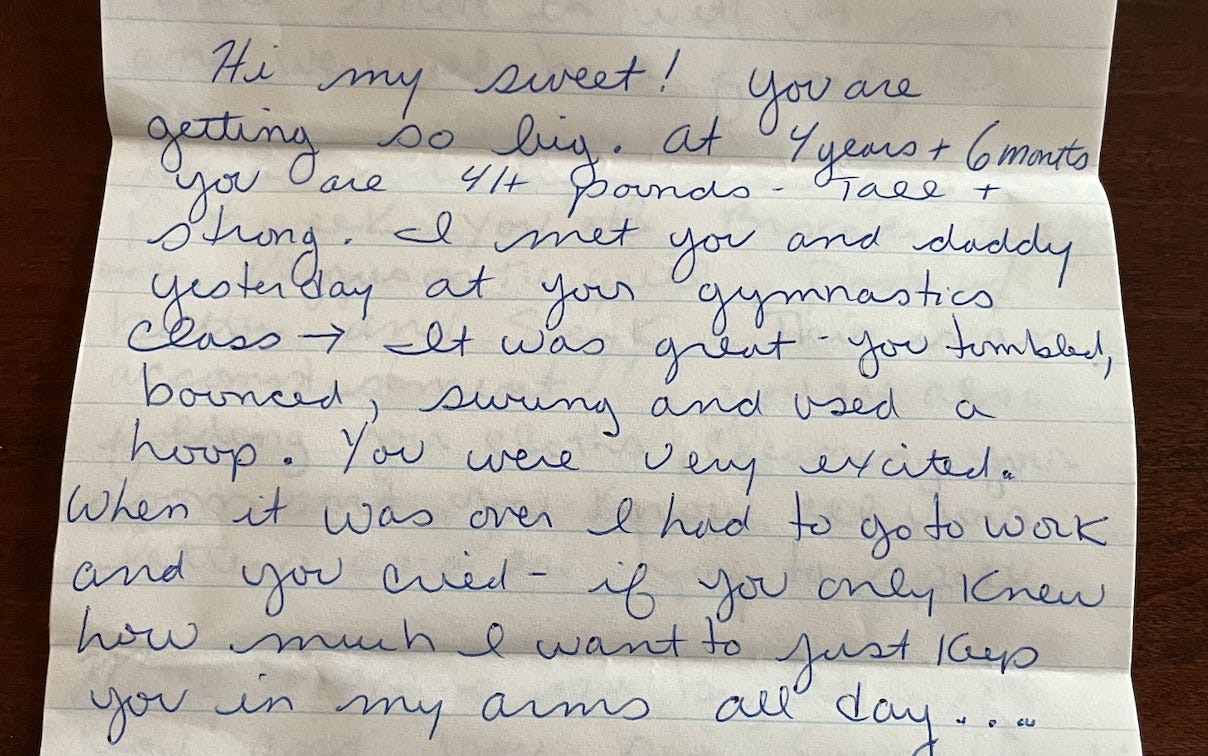
I was loved as a child by my parents, smothered by my mother, who used to write me these cute notes about missing me when I was away at my dad’s house.
And to the best of his capability, my dad loved me too.

for the version of you that wants to go deeper
2x monthly long-form essays
the full archive, from the very first word
(coming soon) free film print of the month
10% of every paid subscription goes to Girls Write Now.
But it was different from one day to the next, from one house to the next; it changed. Love didn’t show up the same in both homes. It was, at most times, rather starkly unbalanced. And I don’t remember it being this way. But I can feel the two halves of self within who were raised entirely separately. I couldn’t tell you how child me made sense of these differences she perceived but had no language to explain.
Mostly, I felt alone. Countless grandparents, 4 parents, 3 peripheral siblings, two houses, different friends in different neighborhoods. People surrounded me, overwhelmed me with their incohesion, and the ephemeral way in which they popped in and out of my life. So, protectively, I coiled inward.
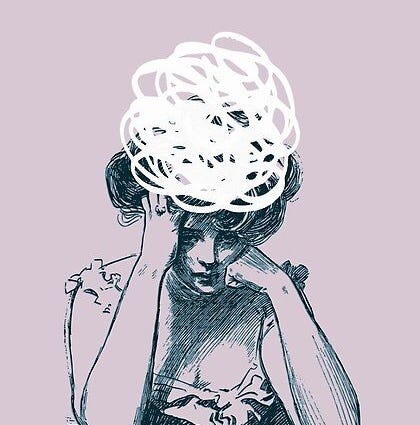
The ever-present narrative in my head, that voice that cuts and dissects the world around me and jumbles up my perspective of reality - that’s always been with me. Guiding me, motivating me, torturing me, yes. But my primary companion all the same.
Sure, it’s panicked in the face of fears; it’s offered little grace to mistakes big and small. It’s warped my relationship with my body and my understanding of self.
It’s not always been a friend, more often than not I’d consider it foe.
It lives to serve, though, protecting me in its ironclad embrace.
I spent many nights as a young girl sitting in bed, crying softly to myself and imagining the physical labor of building up my mental walls. Brick by brick.
I would reassure myself that no one could reach me here. No one could hurt me here.
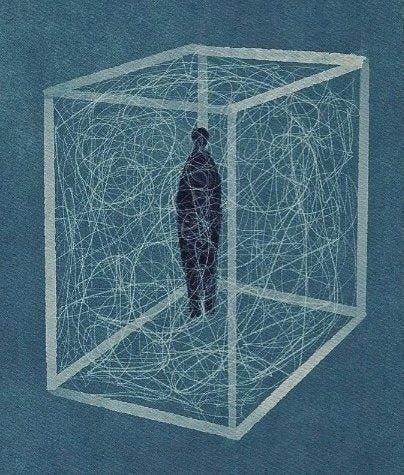
I built us an infallible tower to call home. Just me and the voice together. It promised there we’d always be safe.
My companion started as an external monologue. When I was 3, my mom lost a child that would’ve been my younger brother in earnest. Someone to traverse these two worlds by my side, someone who, I imagined, would be my real-life companion. Someone who would know all of me.
It started with him. I would babble to him at night, willing him to be there with me. Willing him to see that I was unhappy. Willing him to answer and tell me it would all be okay.
Over time, the monologue became my own as childish abstractions gave way to grander truths about life. And my companion donned a proper name, befitting of its control on my psyche.
Anxiety.
And even the rich childhood whimsy that cloaked the ever-present voice in something friendly crumbled before the diagnosis.
Anxiety.
So it really was just all in my head.
Maybe I was a sensitive kid. Maybe I was an empathizer beyond my stature. Maybe I was particularly vulnerable by nature and not just by nurture.
It seems silly and dramatic to write about my childhood woes when they came with an abundance of care and privilege. But when those very privileges are weaponized against you and used to invalidate your existence, they breed guilt and submission just the same.
Who am I to be so unhappy?
I could intuit the flaws in the system that raised me, but they comprised my life. They didn’t feel loud or dramatic. There is no one moment of trauma or abuse that explains it all away.
